The Composio alternative
serious  builders trust.

Secure token vault, enterprise auth patterns, and authorization controls — built for the questions your customers will actually ask.

Connecting agents to tools was the 2025 problem.

That problem is solved — and platforms built to solve it are showing their limits. The teams hitting those limits are the ones whose enterprise customers started asking questions the platform wasn't designed to answer.
The 2025 question
01
Does a connector for this tool exist?
02
Can I skip writing OAuth flows?
03
How fast can I get to a demo?
04
How many tools are in the catalog?
The question now
01
Are credentials isolated per tenant — by architecture?
02
Can my agent act outside what a user authorized?
03
Can I prove the agent's actions, user, and scope?"
04
Does it handle RSA key-pairs, Azure AD, and DWD?
Credential security

Your own credentials.
Never pooled with another customer's.

Composio manages credentials on your behalf — which means their infrastructure is in your recovery path. Scalekit stores every credential in an isolated vault.
01
Token vault — not a shared credential store

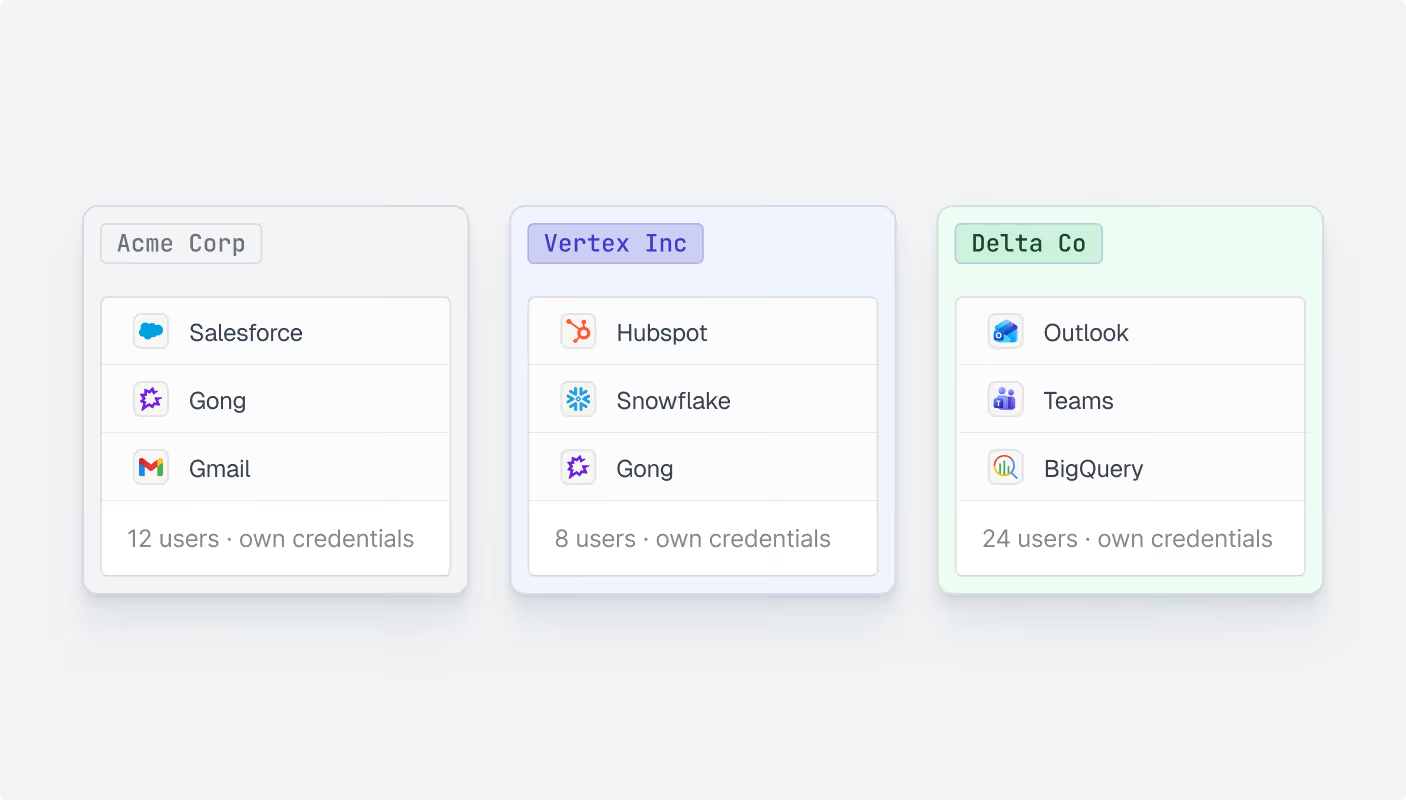
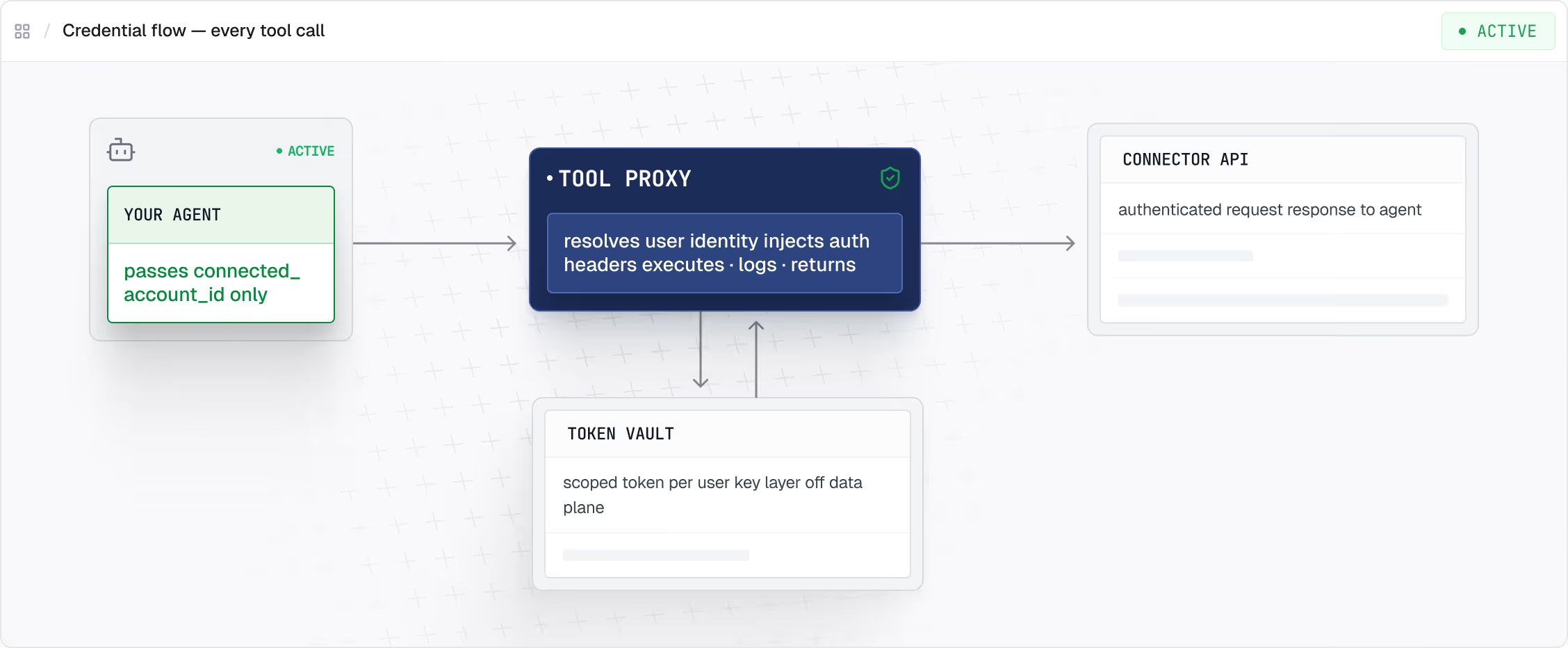
Every credential lives in an isolated vault — encrypted with its own unique key, with the key layer stored entirely outside the data plane. Compromising the database alone is not enough to read a token.
02
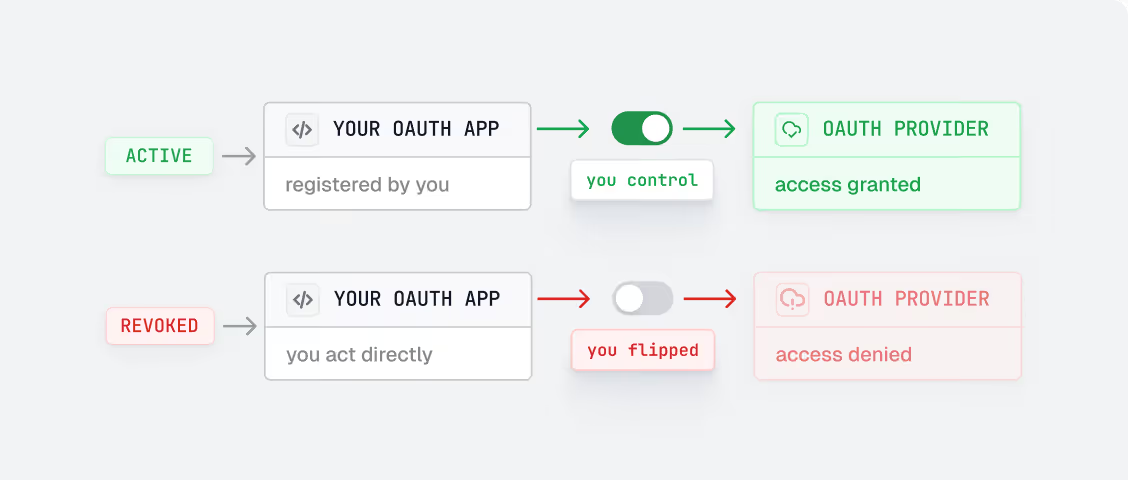
Your credentials, your revocation

You register your own OAuth app and hold your own API keys. They're yours — if something goes wrong, you act directly, without going through Scalekit.
Enterprise-grade connectors

Connectors spanning every Auth pattern.
Not just OAuth and API keys.

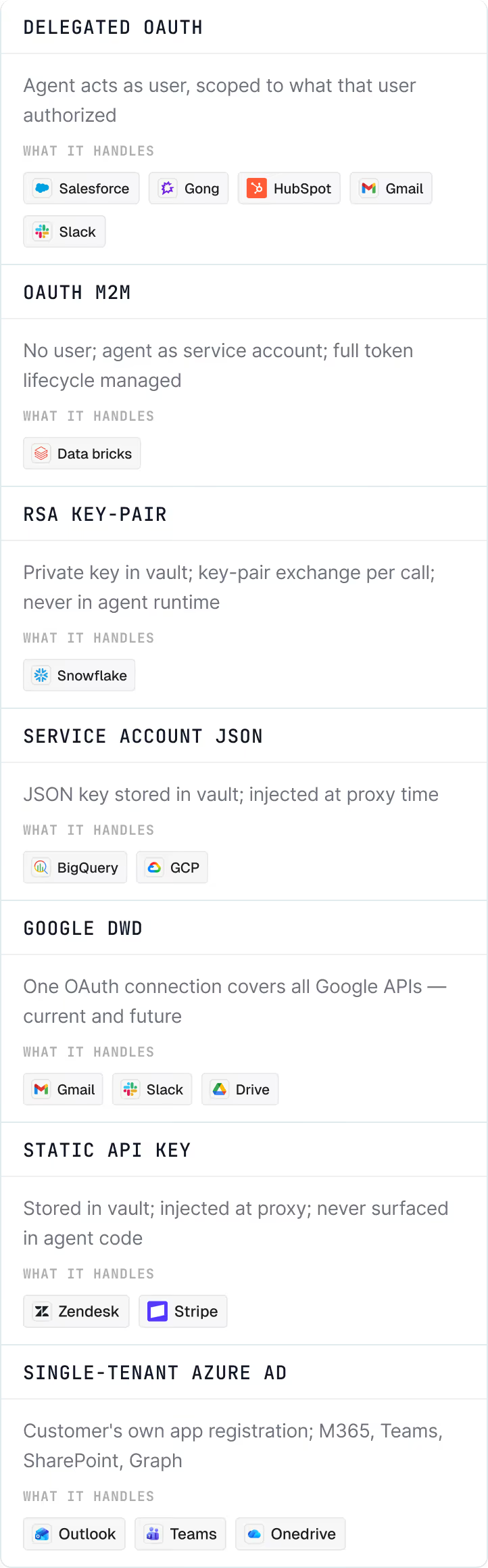
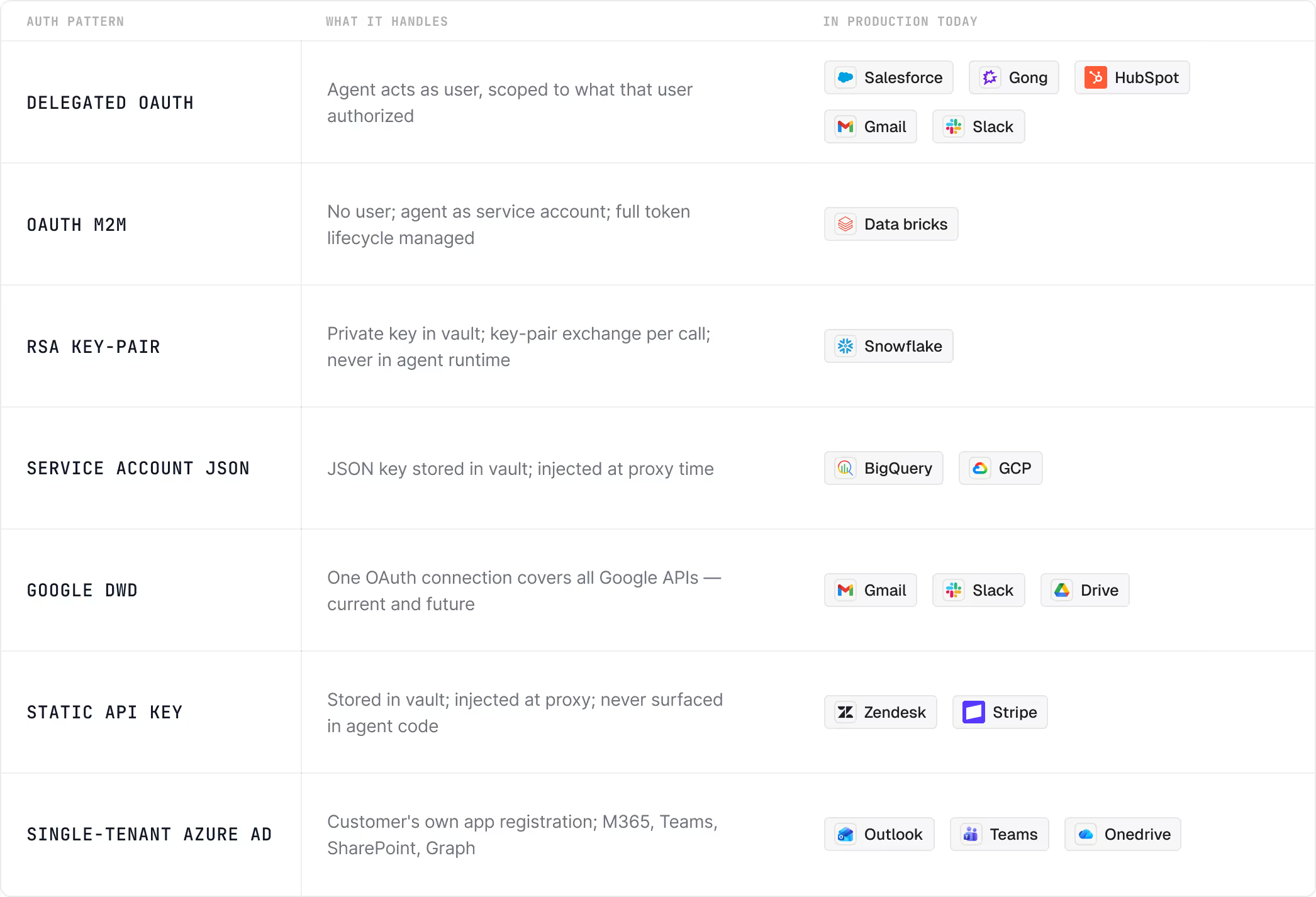
Composio covers OAuth and API keys. Enterprise systems want more — RSA key-pairs, service account JSON, tenant-specific Azure AD. "We have a connector" and "we handle your auth correctly" are two different things.

The connectors your enterprise customers already use

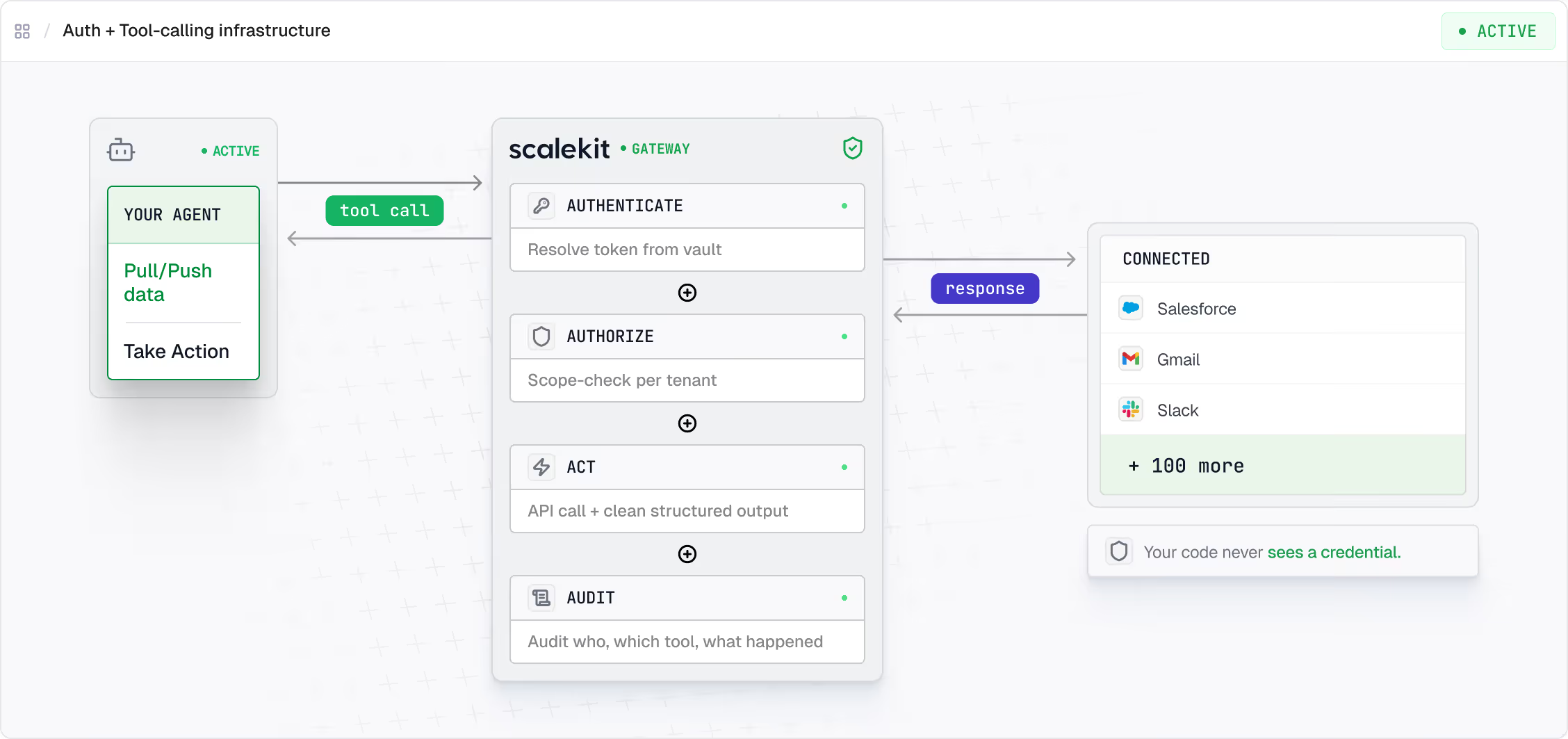
Every connector ships with the full stack — token vault, proxy execution, scoped credentials, and audit trail.
Not just a connection. A production-ready integration.
CUSTOMER STORY

40+ connectors. Zero credential rebuilds.
One auth layer for all of it.

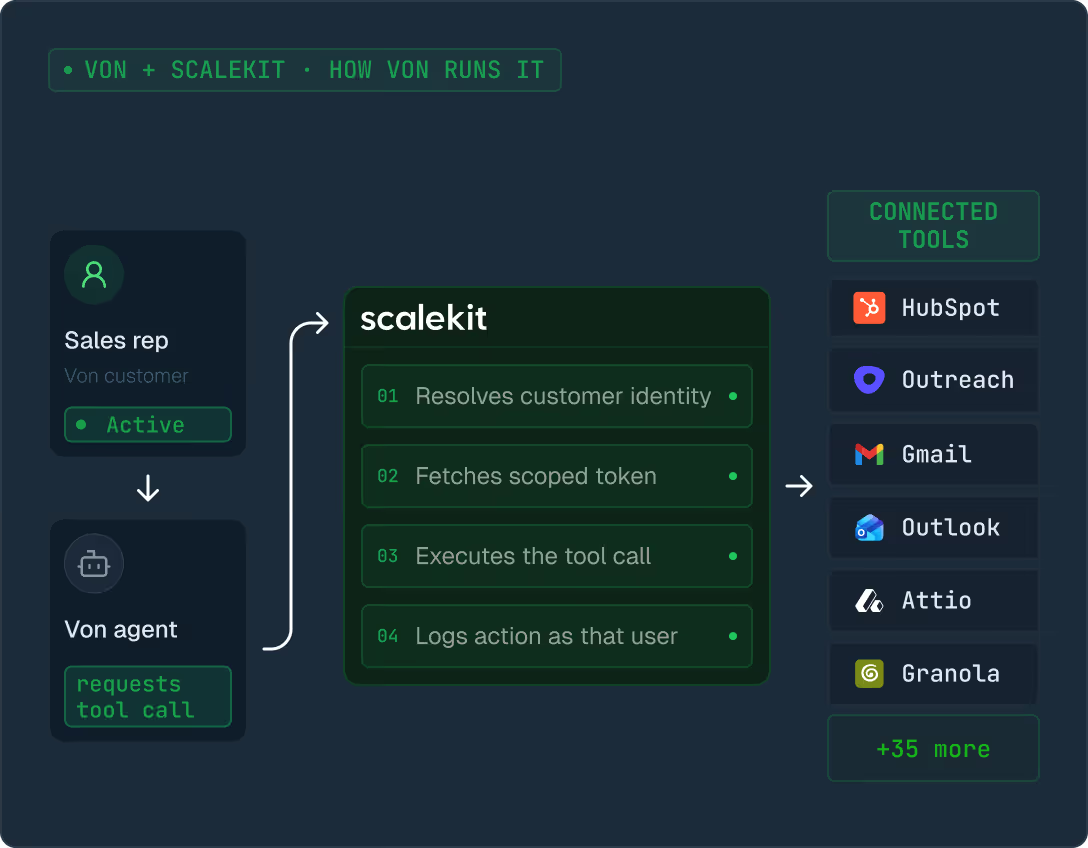
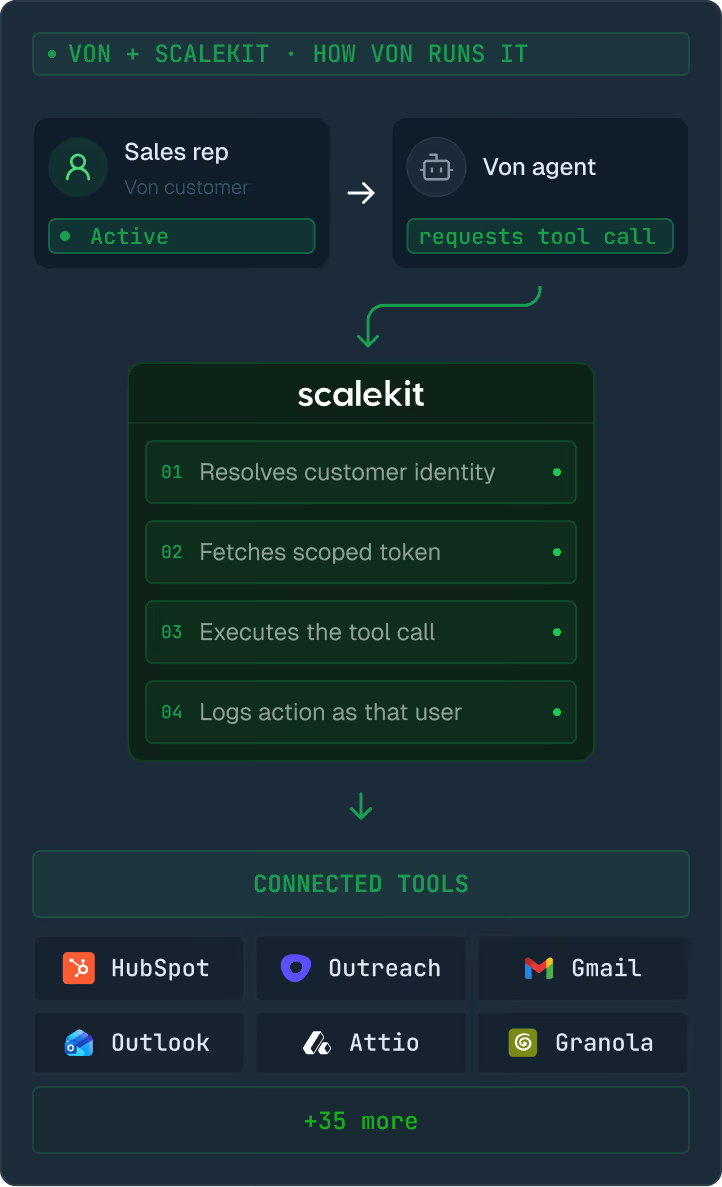
Von builds Al agents that act inside revenue teams' tools on behalf of every customer. Here's how they ship at scale without rebuilding the credential layer per connector.

"Our agents act across Salesforce, Gong, Google Drive, and more, on behalf of every customer. Scalekit behind the scenes meant we can keep adding tools without ever rebuilding how credentials or tool calling work."


Venu Madhav Kattagoni
Head of Engineering, Von
Runtime authorization

What the agent can't do matters as much as what it can.

Authentication answers: is this credential valid? Authorization answers: is this agent allowed to do this specific action, for this specific user, right now? Scalekit enforces both.
01
Scope per tool, not per OAuth connection

Define what each tool is allowed to do — not just which OAuth scopes the user granted. An agent with Salesforce access can be scoped to read-only on opportunities, write-only on notes. Enforced at the proxy on every call.

02
Per-user permission delegation

The user's actual role in the connected system sets a hard ceiling on the agent. An agent acting for a sales rep cannot reach records or take actions that rep couldn't take themselves.

03
Identity verification at call time

Scalekit can verify who the human is before the agent acts — not just "were credentials granted at some point," but "is this the right person authorizing this action right now.

Production infrastructure

Ships with everything
you'd otherwise have to build.

Composio covers the basics. Scalekit ships with audit trail, multi-tenant isolation, and per-user MCP endpoints on day one — so your first enterprise deal doesn't become a six-week infra sprint.
3,000+
Tools available
99.99%
Uptime SLA
<50ms
p95 latency
SOC 2
Type II certified
01
Audit trail at the proxy — not in your code
Every tool call lands as a structured event: agent, user, tenant, tool, scope, duration. No logging pipeline to build. SOC 2 evidence is a query. Security reviews close because the answer is the log, not the process.
02
Per-user MCP URLs — not a shared endpoint
Define a config once. Scalekit generates a per-user authenticated MCP URL — whitelisted tools, pre-authenticated, ready to call. Point any MCP client at it. No token handling on your end.
03
Bring your own connector
Register any internal API, private data warehouse, or custom MCP server. It inherits the full stack — vault, proxy, scoped credentials, audit trail — from day one. No second-class connectors.
04
Multi-tenant isolation — by architecture, not configuration
Each enterprise customer gets isolated credentials. Every agent is scoped to that org's connected systems, capped at each user's permissions. Not a configuration — how the system works.

Works with every major agent framework

Drop Scalekit into your existing stack. No rewrites, no lock-in.
One more thing

Inbound and outbound auth.
One platform.

If you're building a SaaS product with agents, you have two auth surfaces — users logging into your product, and agents connecting to tools for them. Scalekit covers both. One trust boundary. One audit trail.
AgentKit — agents out to tools
Tool calling on behalf of users
Token vault, proxy, per-user credential scoping
Custom connectors, MCP, 100+ built-in
SaaSKit — users into your product
User management, login, enterprise SSO
SCIM provisioning, RBAC
MCP server auth for your own product
Decision framework

The honest version.

Here's when each is the right call.
Use Scalekit when
Enterprise customers will ask "can your agent actoutside what a user is allowed to do?
Agents act on behalf of specific users across a multi-tenant system
Your connectors include Snowflake, Azure AD,BigQuery, or Databricks
You need an audit trail that passes a security reviewwithout custom instrumentation
You want inbound user auth and outboundagent auth on one platform
Use Composio when
You're prototyping — their managed credentials meanzero setup to get a first tool call working
You want the widest possible pre-built catalog withoutregistering your own connectors
Enterprise security questions aren't in scope yet

Build the agent logic. We handle the rest.

Token vault, proxy, multi-tenant isolation, and audit trail — out of the box. Same stack Von ships on.